Creativity Will Keep You Well

Do you remember that catchy song written by Bobby McFerrin in the late 90’s ‘Be happy, don’t worry.’ If you do hum along with me as you read the good news of why the fun of creativity is so-ooo good for us.

Biologist Dr Bruce Lipton explains –
‘Cells, tissues, and organs do not question information sent by the nervous system. Rather, they respond with equal fervour to accurate life-affirming perceptions and to self-destructive misperceptions’ .
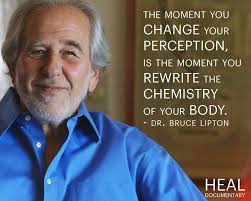
Dr Bruce Lipton

‘Each of our cells is a living entity, and the main thing that influences them is our blood. If I open my eyes in the morning and my beautiful partner is in front of me, my perception causes a release of oxytocin, dopamine, growth hormones – all of which encourage the growth and health of my cells. But if I see a saber tooth tiger, I’m going to release stress hormones which change the cells to a protection mode. People need to realize that their thoughts are more primary than their genes, because the environment, which is influenced by our thoughts, controls the genes.’ Dr. Bruce H Lipton

Be happy ……

What makes us happy is being in the FLOW

Flow is a psychological state in which individuals feel entirely and joyfully absorbed in an activity that challenges their skills and abilities. 

The term Flow was coined by Professor Mihaly Csikszentmihalyi (delightfully pronounced Me-High-Chick-Sent-Me-Hi) Distinguished Professor of Psychology and Management at Claremont Graduate University in California USA. He was also the founder and co-director of the non-profit research institute Quality of Life Research Center that studies happiness and creativity. 
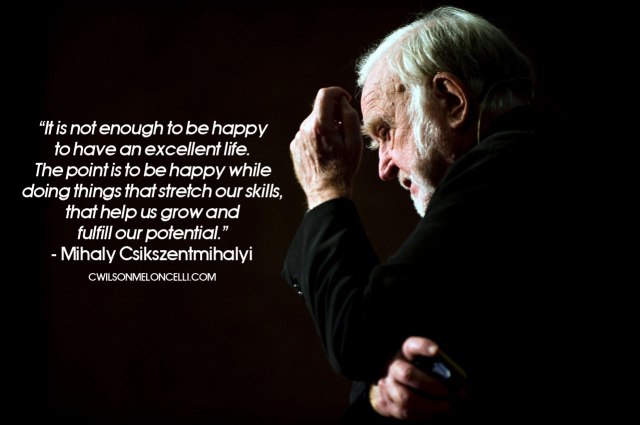
Mihaly Csikszentmihalyi – Died in October 2021 aged 87

Creativity is not limited to our stereo type idea of picking up a paintbrush, threading a needle, using a hot gun, a block of clay or strumming a guitar it can be a physical activity like sport. According to Prof Me-High-Chick-Sent-Me-Hi the act of stretching yourself, is the first important step of getting in the Flow.

Flow is when time means nothing, your whole being is involved and you are using your skills to the utmost. 

‘The best moments in our lives, are not the passive, receptive, relaxing times—although such experiences can also be enjoyable, if we have worked hard to attain them. The best moments usually occur when a person’s body or mind is stretched to its limits in a voluntary effort to accomplish something difficult and worthwhile.’ Mihaly Csikszentmihalyi

Diet & Health – Yesterday & Today

Slide1

“What we eat now is firmly linked to risks associated with ill-health in the Western world in the 21st century.

It makes perfect sense that “radically changing your diet” is a must in today’s world. As well as dietary changes being a king hitter from the Heart Foundations, Diabetic Association, Cancer Council, Obesity Australia, and every other health authority. MS is no exception.”

Why ‘Radically Changing My Diet’ Was Not One Of My Steps To Health

“Fifty years ago, diet would not have been on the collective horizon, as a contributor to disease. Our diets in that time had been shaped by WW11. “Dig for Victory” was a wartime catchcry, and so the community tore up their flowerbeds and planted vegetables and fruit trees. The first six to eight years of my life we ate mainly vegetables and fruit, homegrown and tasty, and no pesticides. Wartime meat rationing was miserly, as was butter, and so my mother took our allowance in soup bones and made good quality stocks for casseroles with beans and vegetables. One egg a week per person did not go far, but this was supplemented with tinned powdered eggs. We ate a lot of fish, as this was not on ration. Bread was dense and salty (no talk of salt is bad for health back then), and even today I still miss the Hovis loaf, a small brown loaf of nuttiness and intensity, which my mother cut into lacy fine slices to eat with the vegetable casseroles.

I remember clearly the first and only times in my first eight years I ate a freshly boiled egg, the first time I had a piece of steak, the first time I ate a piece of chocolate, and an orange, which was a Christmas stocking treat. Rationing continued until I was sixteen, and so the nation continued to have a plain but reasonably healthy diet.  It goes without saying apart from the ubiquitous cup of tea, water was our drink of choice. In my family, we only drank alcohol on festive days, a sherry on Christmas morning or a whiskey with the Christmas cake or the occasional noggin on an evening out to the pub.

The English were used to home-grown produce, and by the 1960’s most folk still grew these in their back gardens or on small parcels of land called allotments. The seasons controlled our eating — for the average family there was no expensive imported out of season fruit or veggies.   Mind you, everyone had a chip saucepan! But for many postwar years, meat was not on the daily agenda for the average family – instead, egg and chips (one egg) or baked beans and chips became regular family meals. For my family, fish — as both parents were keen anglers — was the more frequent meal compared to our meat consumption.”

“It appears the British were at their healthiest in WW11.”

Today:  

“Kelly Turner’s Radical Remission research has demonstrated, the numero-uno on this list is “Radically changing your diet.” For many survivors of cancer or people managing chronic disease, diet is their first thought and action, and it is a proven life-changing step.” (Turner, Kelly. Radical Remission – Surviving Cancer Against All Odds. HarperCollins 2014)

“Professor George Jelinek, in his early sixties, runs and swims regularly and says he has never felt healthier. In 1999, he was diagnosed with multiple sclerosis. This was a devastating blow for him, as he had watched his mother battle the disease for sixteen years, and when she could no longer take the pain or the dependence on others she took her own life. At the time of his diagnosis, he was the professor of Emergency Services at a leading hospital in Perth. He was 45 years old, and a family man with three children.

Immediately, he researched all he could on the disease and his findings led him to the work of American neurologist Roy Swank, who had published a paper in the Lancet 1990 “Effect of Low Saturated Fat Diet in Early and Late Cases of Multiple Sclerosis.” After many years of refining his findings on his seven-year recovery back to health, Professor George Jelinek wrote his first book Overcoming Multiple Sclerosis,” published in 2016, which features his seven-step program for recovery. This program is widely accepted as an excellent way to manage the disease. It has been tried and tested by many sufferers around the world who have found considerable benefits from living this lifestyle.”

One of key steps included: Changing your diet — ( Professor Jelinek also recommends the use of quality supplements like Omega-3 fatty acids and Vitamin D)

Excerpts from A Journey of Creative Healing-  Chapter 9:  The Elephant in the Room – Radically Changing Your Diet